
Troubleshooting Common Electrical Issues in Retail Spaces

Last Updated: November 15, 2026
Quick Summary
Troubleshooting common electrical issues in retail spaces starts with checking the simple causes first: breakers, reset buttons, and whether other outlets or fixtures on the same circuit still work. Any outlet that runs warm, smells like burning plastic, or shows discoloration should be shut off and evaluated by a licensed electrician. Repeated breaker trips and flickering across several fixtures point to problems that need professional diagnosis.
Check the breaker and any reset buttons first when an outlet goes dead.
A warm, buzzing, or discolored outlet means shut off the circuit and call a licensed electrician.
Do not keep resetting a breaker that trips repeatedly, and do not replace it with a larger one.
Flicker on one fixture usually points to that fixture; flicker across many lights points upstream.
Keep a log of breaker trips, affected areas, and outage duration to spot recurring patterns.
Table of Contents
Why Electrical Problems Hit Retail Stores Harder
Retail stores run on electricity from open to close, so troubleshooting common electrical issues in retail spaces starts with understanding how much depends on it. When you need a licensed electrician for a store, I also offer commercial electrical services for offices, retail spaces, and tenant improvements.
A small electrical fault that a homeowner might live with for months can shut down a storefront in an afternoon. That is why retail troubleshooting calls for a different approach than a house call.
Most store electrical problems fall into a few familiar groups:
Breakers that trip under normal daily load
Lights that flicker, dim, or die
Outlets that go dead or run warm
Aging panels that have no room for new equipment
Loose connections that cause heat over time
Knowing these patterns helps you describe the problem clearly when you call for help. It also helps you decide what is safe to check yourself and what needs a licensed electrician.
Commercial Outlet Troubleshooting: Dead Outlets and Warm Faceplates
A dead outlet is often the first sign of trouble in a retail space, and it is a common starting point when troubleshooting common electrical issues in retail spaces. Start by checking the simple causes.
A warm faceplate is more serious. For help tracking down the cause, see my electrical troubleshooting service, which covers flickering lights, tripping breakers, and dead outlets.
Here is a simple way to sort out what you are seeing:
Dead outlet, nothing else affected: Check the breaker and any reset buttons first.
Several outlets dead on one wall: Likely a shared circuit or a failed connection upstream.
Warm or buzzing outlet: Shut off the circuit and call a licensed electrician.
Scorch marks or burning smell: Do not reset anything. Get professional help right away.
Do not open the outlet box or replace the receptacle yourself if you are unsure. Live wiring in a commercial setting carries real risk.
Start with the simple checks below, and treat any heat or burning smell as a stop sign.
Outlet symptom | Likely cause | What to do |
Dead outlet, nothing else affected | Breaker or reset button | Check breaker and reset buttons first |
Several outlets dead on one wall | Shared circuit or upstream connection | Likely needs professional evaluation |
Warm or buzzing outlet | Loose or overloaded connection | Shut off circuit and call a licensed electrician |
Scorch marks or burning smell | Serious fault | Do not reset; get professional help right away |
Retail Store Lighting Problems: Flickering, Dimming, and Dead Fixtures
Lighting problems in a store cost more than comfort. Flickering lights make shoppers uneasy, dim lighting hides merchandise, and a dark display window can cost you sales before anyone walks in.
Start by sorting the symptom by fixture type, because the likely cause changes with the equipment:
Track and display lighting: Flicker or dropouts often trace to a failing driver, a loose connection at the track head, or a dimmer that is not compatible with the LED load. If one head flickers and the rest of the track is steady, the problem is usually in that head or its driver.
Signage and channel letters: Intermittent or dead signage frequently comes from a failed power supply (often called a driver or transformer), water intrusion at an exterior connection, or a loose splice. Signage on a timer or photocell adds another failure point.
Refrigerated display cases: Lights inside cases fail more often because of condensation, cold, and vibration. A dead case light is worth checking alongside the case's other electrical behavior, since a shared circuit problem can show up here first.
Fitting rooms and back-of-house: Failing switches, loose lampholders, and worn connections at heavily used locations are common. A fitting room light that flickers when the door or switch is bumped points to a connection, not a lamp.
Exterior and parking-lot lighting: These often run on photocells, timers, or contactors. If exterior lights fail together at dusk, suspect the control device rather than every fixture at once.
Ask yourself these questions when lights act up:
Does one fixture flicker, or do many fail together?
Did the problem start after a recent change, a new dimmer, or new equipment on the same circuit?
Does the flicker stop when another large load, like refrigeration or a display heater, turns off?
Is the problem tied to a time of day, a door switch, or a photocell?
Many fixtures fail one at a time, which points to a fixture-level problem such as a driver, lamp, or connection. That pattern is a job for a professional, such as the Electrical Troubleshooting & Repairs service I offer for stores in the area.
Watch out: a dimmer rated for the wrong load type or an undersized neutral shared across circuits can cause flicker that looks like a fixture failure.
If a whole area of the store goes dark, treat it as a business-continuity issue first. Move checkout and high-value displays to working circuits if you can do so safely with portable lighting, and get the circuit evaluated before the store opens again.
Why a Breaker Keeps Tripping in a Commercial Space
A breaker that trips once after a heavy load may be doing its job. A breaker that trips again and again is telling you something is wrong.
The most common causes are an overloaded circuit, a short circuit, or a ground fault. An overloaded circuit usually shows up when several high-draw items, like refrigeration, space heaters, or display equipment, share one circuit. A short or ground fault often trips the breaker right away, even when nothing is plugged in.
Here is what I recommend:
Note what was running when the breaker tripped.
Do not keep resetting it over and over.
Do not replace a breaker with a larger one. This can start a fire.
Have the circuit checked before the problem gets worse.
Repeated trips are one of the clearest reasons to call for a professional evaluation. I install commercial dedicated circuits for restaurants, offices, HVAC, and equipment when a load needs its own circuit.
A Safe Step-by-Step Diagnostic Workflow
You can handle a few safe checks before calling for help. These steps do not involve opening panels or working on live wiring.

Write down the symptom. Note what failed, when it started, and what changed recently.
Check the obvious. Look at breakers, reset buttons, and light switches. Confirm whether the problem affects one outlet, one fixture, or a whole area.
Note the pattern. Does it happen at certain times, under certain loads, or after equipment starts?
Look for warning signs. Heat, burning smells, buzzing, sparks, or discoloration mean stop and call a licensed electrician.
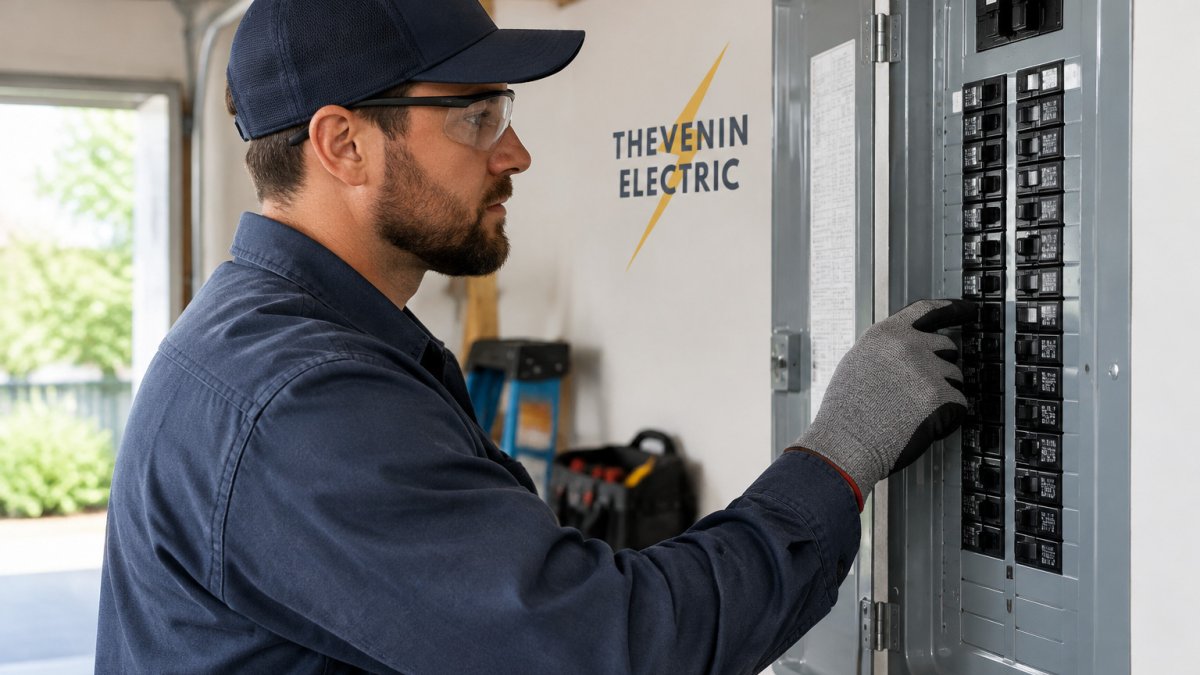
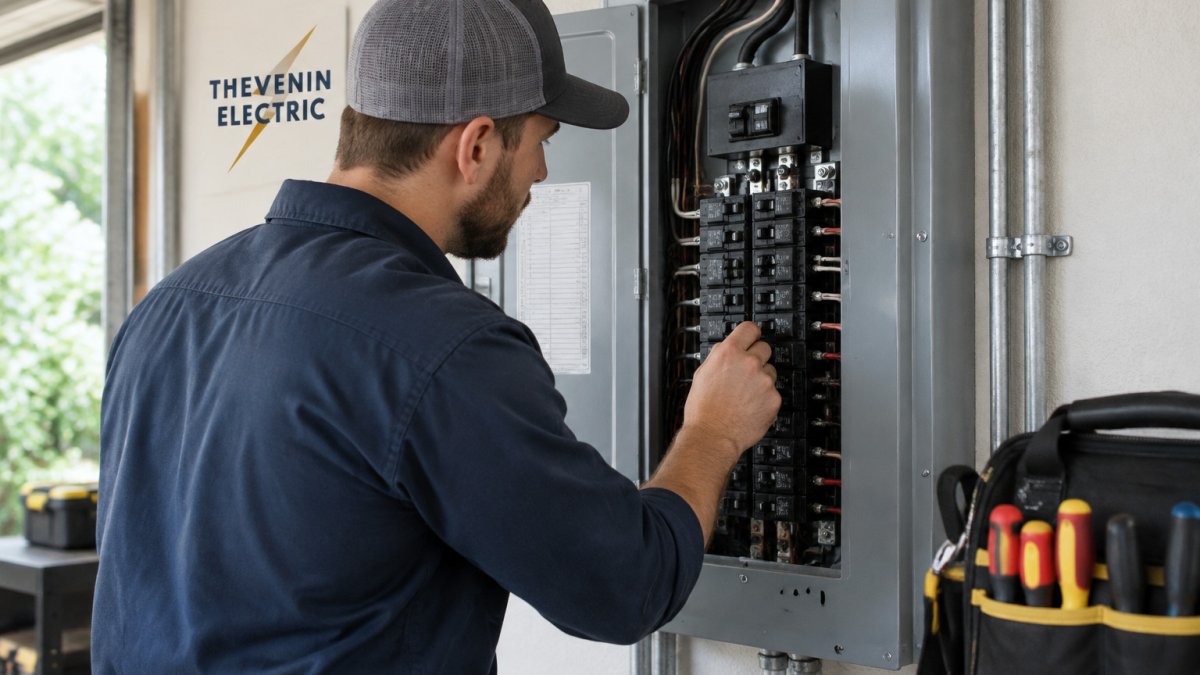
Do not open panels or force reset. Leave the panel cover and live wiring to a qualified person.
Call a licensed electrician. Give them your notes. A clear description of the pattern often shortens the diagnosis.
Photos of the work area and any affected outlets or fixtures can also help when you call.
When a Retail Electrical Problem Needs a Licensed Electrician
Some problems should never wait. Call a licensed electrician if you see any of the following:
Warm or discolored outlets, switches, or panels
Burning smells or buzzing from electrical equipment
Repeated breaker trips after resetting
Flickering lights that spread across the store
Any sign of water near electrical components
Problems after a panel or equipment change
Permits and code requirements also matter in commercial work. A licensed electrician knows which repairs and upgrades need permits and inspections in our area. Confirm the current requirements with them before work begins, since they can vary by project. If the troubleshooting points to an undersized or aging service, a Electrical Panel Upgrades & Replacements project may be part of the solution.
Watch out: a quick reset of a repeatedly tripping breaker can hide a fault that is building heat inside the wall.
Electrical Maintenance Checklist for Retail Stores
Regular checks catch small problems before they shut you down, but a checklist only helps if it is tied to a cadence and a record.
Use this as a starting cadence, and adjust it to your store's hours and equipment:
Monthly walk-through (staff-level, no panel work):
Test outlets and note any that feel warm, look discolored, or seem loose
Walk the sales floor and confirm every fixture works and none flicker
Check display, signage, and exterior lighting at open and at dusk
Listen for buzzing near panels, fixtures, and refrigeration
Confirm panel access is clear and unblocked
Note any breaker that tripped since the last check, and what was running
Seasonal check (before busy periods and weather changes):
Review high-load equipment, refrigeration, space heaters, display equipment, and confirm each is on an appropriate circuit
Check exterior and parking-lot lighting controls (photocells, timers, contactors)
Look for water intrusion near exterior fixtures and connections
Confirm breaker labels still match the circuits after any equipment changes
Review the problem log for repeat symptoms in the same area
Annual professional evaluation:
Have a licensed electrician inspect panels, connections, and high-load circuits
Review any recurring trips, warm outlets, or flicker patterns with them
Plan any circuit additions before adding new equipment, rather than after
Tracking matters as much as checking. Keep a simple log with four measures: repeat breaker trips by circuit, outage duration, which area or equipment was affected, and how quickly the issue was resolved.
Watch out: a checklist item that says "check the panel" can tempt staff to open a panel cover.
Scheduling a Professional Evaluation for Your Store
If you are dealing with dead outlets, flickering lights, or breakers that keep tripping, a professional evaluation is the next step. Thevenin Electric works with store owners and managers in the area to find the cause and recommend a safe, code-compliant fix. For stores that need work on lighting or fit-outs, the Commercial Lighting & Tenant Improvements and Commercial Electrical Services pages describe what I handle.
Call Thevenin Electric at (541) 250-3503 or visit https://theveninelectric.com/contact to request a visit. Describe the symptoms you have seen, and we can plan the best next step for your space.
Frequently Asked Questions
What are the most common electrical problems in retail stores?
The most common problems in retail spaces are frequently tripping breakers, flickering or dimming lights, dead or intermittently working outlets, and warm or buzzing outlets and switches. Heavy display lighting, point-of-sale equipment, refrigeration, and space heaters can overload circuits that were not designed for that mix. Aging panels and loose connections often sit behind many of these symptoms, so a store that sees one of them should look at the whole circuit rather than only the device that failed.
Why do the lights in my store keep flickering?
Flickering lights in a retail store often point to a loose connection at the fixture, switch, or panel, a failing ballast or driver, or a circuit that is running close to its limit when refrigeration or HVAC cycles on. If flickering happens only when other equipment starts, the shared circuit is a likely cause. Because a loose connection can overheat and become a fire risk, flickering that persists should be inspected by a licensed electrician rather than left alone.
When should a retail business call a licensed electrician?
Call a licensed electrician whenever a breaker trips repeatedly, an outlet or switch feels warm, smells of burning, or shows discoloration, or several outlets lose power at once. Any sparking, buzzing that gets louder, or visible damage to wiring or a panel also warrants professional attention. Work inside an electrical panel should be left to a licensed electrician, since energized equipment carries real shock and arc-flash risk.
Comments