
Electrical Safety Tips for Residential Homes

Last Updated: November 21, 2026
Quick Summary
Electrical safety means keeping every cord, outlet, appliance, and circuit within the conditions it was designed for. Run a monthly check for frayed cords, warm or scorched outlets, daisy-chained power strips, and GFCI function, then test smoke alarms and inspect stored cords seasonally.
Test every GFCI outlet monthly using its test and reset buttons.
Never let one power strip feed another power strip.
Extension cords are for temporary use, never permanent wiring.
Keep space heaters at least three feet from bedding and curtains.
Call a licensed electrician for heat damage, burning smells, buzzing panels, or repeated breaker trips.
Not sure what that warm outlet means?
Thevenin Electric troubleshoots home electrical problems and explains your options clearly.
Table of Contents
Why Electrical Safety Matters in Every Home
Electrical safety is the practice of keeping every cord, outlet, appliance, and circuit in your home within the conditions it was designed for.
The stakes are simple. Electricity is invisible until it fails, and when it fails it usually does so as heat, sparks, or a shock.
Below, I'll walk you through a checklist you can actually keep up with, the warning signs worth acting on, and the point where calling a licensed electrician is the right call.
Your Electrical Safety Checklist for Homeowners
An electrical safety checklist for homeowners is a short, repeatable routine that catches worn cords, overloaded outlets, and heat damage before they become a repair or a fire. The trick is splitting it into a quick monthly pass and a deeper seasonal check.
Monthly Walk-Through
Run your hand along each visible cord and look for fraying, cracks, or exposed wire
Check that outlets and switch plates are cool to the touch and free of scorch marks
Confirm no power strip is feeding another power strip
Seasonal Deep Check
Test smoke alarms and carbon monoxide detectors
Look behind large appliances for crushed or pinched cords
Inspect extension cords stored over the summer or winter for damage
Here is how I split the routine into a quick monthly pass and a deeper seasonal check.
Task | Frequency |
Check cords for fraying, cracks, or exposed wire | Monthly |
Confirm outlets and switch plates are cool and unscorched | Monthly |
Make sure no power strip feeds another power strip | Monthly |
Test every GFCI outlet with its test and reset buttons | Monthly |
Clear cords away from doorways, rugs, and walking paths | Monthly |
Test smoke alarms and carbon monoxide detectors | Seasonal |
Look behind large appliances for crushed or pinched cords | Seasonal |
Inspect stored extension cords and outdoor outlets for damage or moisture | Seasonal |
Electrical Warning Signs in a Home You Should Never Ignore
The warning signs that matter most are heat, smell, and sound: warm outlet covers, a burning odor near a switch, buzzing from a panel, or lights that flicker when a single appliance kicks on.
Watch out: a scorched or discolored outlet is not a cosmetic issue. You can read more about how professional troubleshooting works if you're not sure what you're seeing.
Extension Cord Safety: Temporary Use Only
Extension cords are meant for temporary use, not as permanent wiring. When a cord becomes the permanent power source for a space heater, a freezer, or a whole entertainment setup, it runs hotter than intended and the risk climbs.
A few rules that prevent most extension cord problems:
Match the cord's rating to the appliance, not just the plug shape
Never run cords under carpets, through doorways, or across walking areas
Keep cords away from heat sources and wet areas
If you find yourself reaching for an extension cord every day, that's a sign you need another outlet, not another cord. Adding a circuit is a job for a licensed electrician.
When to Call an Electrician for Electrical Problems
Call a licensed electrician when you see heat damage, smell burning, hear buzzing from a panel, get a shock from an appliance, or have a breaker that trips repeatedly.
What most guides miss is the difference between a tripped breaker and a failing circuit. For a closer look at what residential electrical repair involves, that page covers the process from diagnosis to fix.
Room-by-Room Electrical Safety
Room-by-room checks catch the hazards that a whole-house pass overlooks, because most electrical fires start where cords, water, and heat share space. Walk each room with fresh eyes.

Kitchen and Bathroom
Water and electricity need distance. Keep appliances away from sinks, use GFCI outlets near water, and unplug small appliances like toasters and hair dryers when they're not in use. Never run a cord across a wet counter.
Living Areas and Bedrooms
Check behind furniture and under rugs for pinched or crushed cords. Keep space heaters on a hard surface, at least three feet from bedding, curtains, and other combustible materials, and never leave one running unattended. Charging cables for phones and laptops belong on a hard surface, not tucked under a pillow.
Garage, Basement, and Outdoor Spaces
Garages and basements collect extension cords, power tools, and damp air. Inspect cords before each use, keep them off wet floors, and make sure outdoor outlets are GFCI-protected and covered. Space heaters in a garage need the same three-foot clearance as anywhere else.
Panels, Breakers, and Fuses: The Heart of Your Electrical System
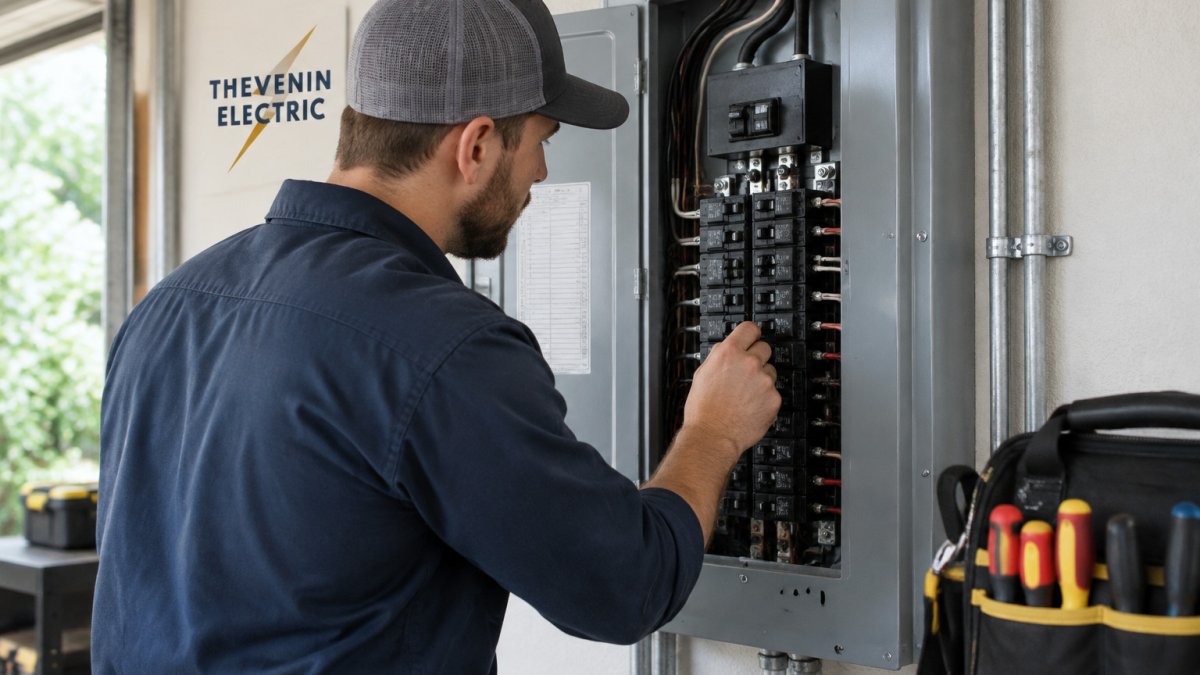
Your electrical panel is the distribution point where the utility's power splits into the branch circuits that feed each room, and the breakers or fuses inside it are the safety valves that cut power when a circuit draws more than it was designed for.
It's worth separating three things that homeowners often blur together:
Service capacity, the total power available to the house, set by the service entrance and main disconnect.
Panel breaker space, the number of open slots for new circuits. A full panel doesn't automatically mean you need a bigger service.
Branch-circuit requirements, what a specific appliance or circuit actually needs in conductor size, overcurrent protection, and GFCI or AFCI protection.
A panel can have plenty of capacity and no open slots, or open slots and a service that's already near its limit. Those are different problems with different solutions.
What You Can Safely Check Yourself
Look at the panel cover from a distance. Discoloration, scorch marks, or a burning smell near the panel means stop and call an electrician.
Listen. A faint hum is normal; loud buzzing, crackling, or a sizzle is not.
Touch the cover briefly with the back of your hand. It should be at room temperature. A warm panel is a warning sign.
What you should not do is remove the deadfront (the inner cover over the wiring) or poke around inside the panel. The main lugs remain energized even with the main breaker off, and the workspace in front of a panel is a code-defined clear area for a reason.
What Repeated Tripping Is Telling You
A breaker that trips once after you ran a space heater and a microwave on the same circuit is doing its job. A breaker that trips again and again on the same circuit is a symptom, and the cause matters:
Overloaded circuit, too much load for the wire size. The fix is usually redistributing loads or adding a dedicated circuit, not a bigger breaker.
Short circuit or ground fault, a hot conductor is contacting a neutral, ground, or metal. This is a wiring problem, not a usage problem.
Failing appliance or cord, the fault may be in what's plugged in, not the house. Unplug the device and see whether the trip stops.
Watch out: never replace a tripped breaker with a larger one to stop the tripping. The breaker is sized to protect the wire, and upsizing it moves the failure point into the wall.
Fuses and Older Panels
Fuses are common in older homes and are perfectly safe when used correctly, the danger is when someone installs a fuse with a higher rating than the circuit allows, or wraps a blown fuse in foil or wire to "fix" it. This overview of panel upgrades explains what a replacement actually involves and when it's the right call versus a repair.
If anything on this list has you unsure, a warm cover, a breaker that keeps tripping, a panel you can't read, that's the point to bring in a licensed electrician rather than open the cover yourself.
Older Homes, Modern Loads, and Charging Devices
Older homes were wired for a different set of demands. A house built when the biggest load was a refrigerator and a few lamps is now running computers, multiple chargers, a heat pump, and often an EV. The wiring that was fine decades ago may not have the capacity or the safety features a modern load expects, but that doesn't mean every older home needs a service upgrade, and it's worth knowing the difference before you assume the worst.
What to Look For in an Older Home
Two-prong receptacles with no ground slot. Ungrounded outlets aren't automatically unsafe, but they limit what you can plug in safely and change how GFCI protection is applied. There are code-compliant ways to address them short of rewiring the whole house.
Aluminum branch-circuit wiring. Common in some mid-century homes, aluminum branch wiring needs specific connectors and devices rated for it. Loose terminations are the concern, and a qualified evaluation is the right first step.
DIY additions. A previous owner's added outlet, garage circuit, or shop subpanel is worth a look, especially if it wasn't permitted or inspected. Undersized wire and improvised splices are the usual findings.
Modern Loads and Charging Devices
Today's households add load in places the original wiring never anticipated: e-bikes and scooters, cordless tool batteries, laptops and phones on chargers overnight, gaming setups, and increasingly an EV. A few practical points:
Battery charging belongs on a hard, non-combustible surface, not a bed, couch, or pile of laundry. Use the charger that came with the device or a listed replacement, and stop using any charger with a damaged cord or a swollen battery.
Don't daisy-chain power strips or surge protectors to reach a charger. That's one of the most common overload patterns I see.
EV charging is its own conversation. A 240-volt Level 2 charger is typically on a dedicated circuit, and the right amperage depends on your panel, your service, and how you drive. Lower-amperage charging and approved energy management systems can sometimes eliminate the need for a service upgrade, but that's a determination to make with an electrician looking at your actual panel and load calculation, not a rule of thumb.
If you're planning new electrical demands in an older home, this guide to which electrical upgrades to prioritize first can help you sort wants from needs, and if EV charging is on your list, the EV charger installation page covers what the process looks like.
A dead outlet is one of the most common calls I get. If you're working through your checklist and find one, how to fix dead outlets safely covers what's safe to check yourself and what isn't.
Frequently Asked Questions
What are the top electrical safety tips for residential homes?
Check cords for fraying or cracks, keep extension cords temporary, avoid overloading outlets and power strips, and keep cords away from heat, water, and walkways. Use appliances according to manufacturer instructions, give space heaters three feet of clearance, and install GFCIs in wet areas. Test smoke alarms monthly and call a licensed electrician for burning odors, sparks, or repeated breaker trips.
What should I do if an outlet or switch feels warm?
A warm outlet or switch is a warning sign of loose wiring, overload, or a failing device. Stop using it, unplug anything connected, and turn off the circuit at the panel if you can do so safely. Do not open the device yourself. Call a licensed electrician to inspect it, because heat at an outlet can lead to an electrical fire.
When should I call an electrician about a tripping breaker?
Call an electrician if a breaker trips repeatedly, if it trips with nothing unusual plugged in, or if you smell burning near the panel. A single trip after an overload may be normal, but repeated trips point to a circuit problem, damaged wiring, or a failing breaker. A licensed electrician can trace the cause and recommend the right repair.
Is it safe to use an extension cord as permanent wiring?
No. Extension cords are for temporary use only. They are not designed for permanent wiring, can overheat when run under carpets or through doorways, and create trip hazards. If you need power in a spot without an outlet, have a licensed electrician install a permanent receptacle instead of relying on a cord.
How can I reduce electrical hazards around children and pets?
Install tamper-resistant receptacles, use outlet covers on unused outlets, and keep cords out of reach. Secure loose cords along walls, block access to power strips, and teach children not to pull plugs by the cord. Keep pets from chewing cords by using cord covers or rerouting cables, and unplug small appliances when not in use.
How often should I check my home for electrical hazards?
Do a quick walk-through monthly: check cords, outlets, and power strips for damage or heat. Do a deeper check each season, including GFCIs, smoke alarms, and the panel area. Have a licensed electrician inspect your system if your home is older, if you add major appliances, or if you notice warning signs like flickering lights or burning odors.
Comments