
How to Hire a Licensed Electrician for New Construction

Table of Contents
Why Hiring a Licensed Electrician for New Construction Matters
How to Verify Licensing, Insurance, and Permits
When to Bring an Electrician Into Your Build
Questions to Ask an Electrical Contractor Before You Sign
Defining the New Construction Electrical Scope of Work
How to Compare Electrical Contractor Bids
Your New Home Electrical Planning Checklist
Conclusion
Frequently Asked Questions
Last Updated: October 19, 2026
Why Hiring a Licensed Electrician for New Construction Matters
The electrical system in a new home is the one trade you cannot easily fix later. Wiring buried behind drywall, an undersized panel, or a circuit that fails inspection costs far more to correct after the fact than to plan correctly from the start.
At Thevenin Electric, we work directly with homeowners and general contractors on new builds, and the pattern is consistent: projects that go smoothly are the ones where the electrician was involved before the foundation was poured.
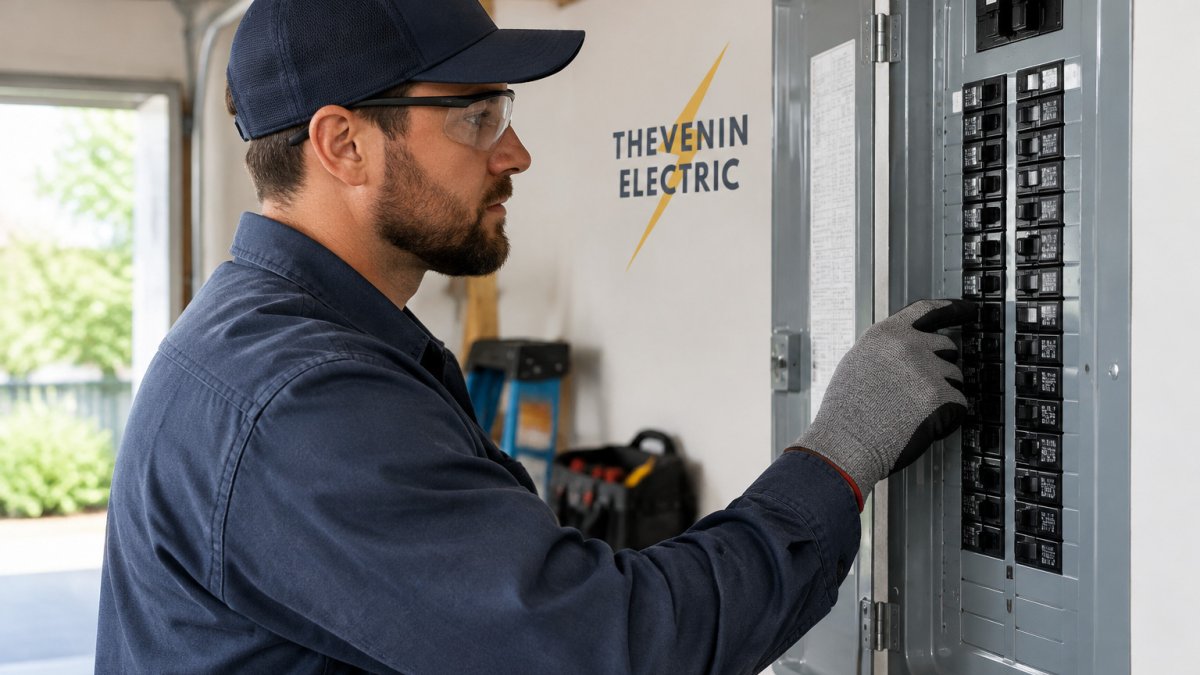
A licensed electrician is a tradesperson who holds a current state electrical license, works under adopted code requirements, and can pull permits and stand behind inspections.
Watch Out The most expensive mistake in new construction is hiring the cheapest bid and discovering at rough-in that the panel has no room for the circuits you actually need. Moving a panel or adding a subpanel later means opening finished walls.
How to Verify Licensing, Insurance, and Permits
Verification takes about fifteen minutes and protects you from the single biggest new-construction risk: an unlicensed contractor whose work fails inspection. Ask for three things before anyone sets foot on the job.
License number. Look it up through the Oregon Building Codes Division contractor license search. Confirm the license is active and matches the business name on the bid.
Certificate of insurance. Request a current certificate showing general liability coverage, and call the insurer to confirm it is still in force. A certificate can be cancelled the day after it is issued.
Bond. Oregon requires licensed contractors to carry a surety bond. Ask for the bond number and verify it.
Permits deserve their own conversation. Electrical permits are typically pulled by the licensed contractor, and inspections happen in phases. Ask who pulls the permit, who schedules inspections, and who pays the permit fees. Get the answer in writing.

Pro Tip Ask for the license number in writing before you ask for a bid. Contractors who hesitate or deflect on this question are telling you something useful.
When to Bring an Electrician Into Your Build
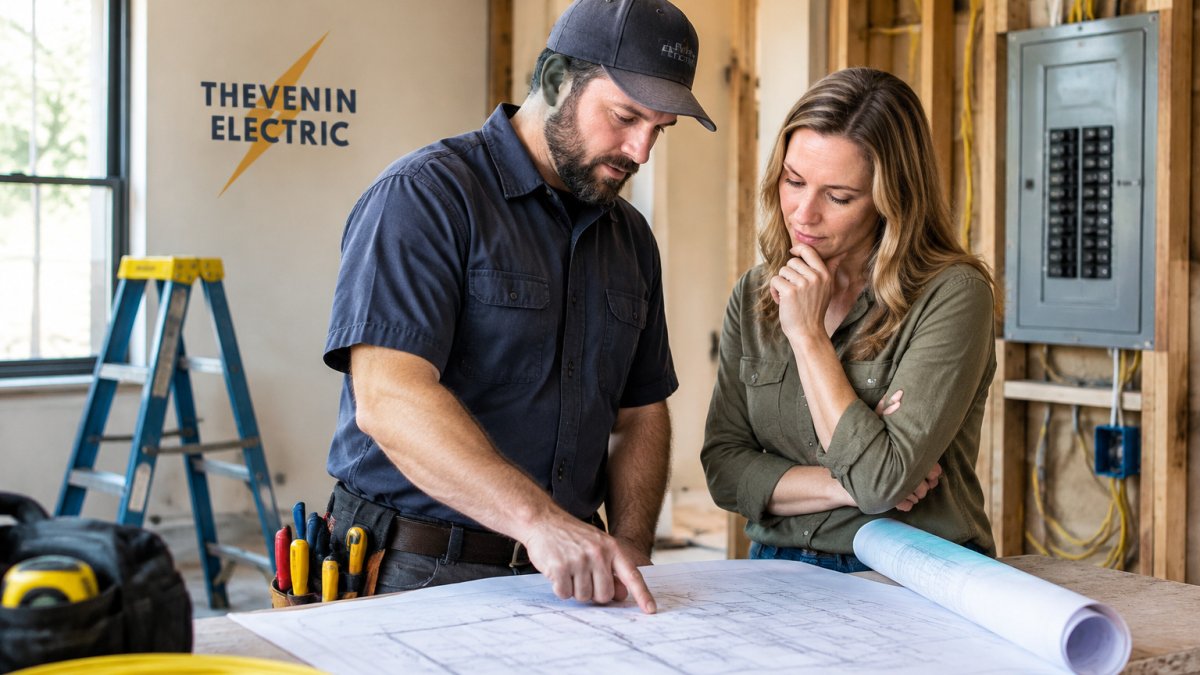
Bring the electrician in during design, not after framing. The ideal window is while the plans are still being drawn, because that is when outlet placement, circuit layout, and panel capacity are cheapest to change.
Here is how the electrical work typically sequences on a new build:
Design phase - review plans, confirm service capacity, and lay out the electrical plan
Pre-construction - pull permits and order long-lead materials
Rough-in - run wiring and set boxes before insulation and drywall
Finish work - install devices, fixtures, and the panel trim
Inspection and handover - final inspection, then documentation to the owner
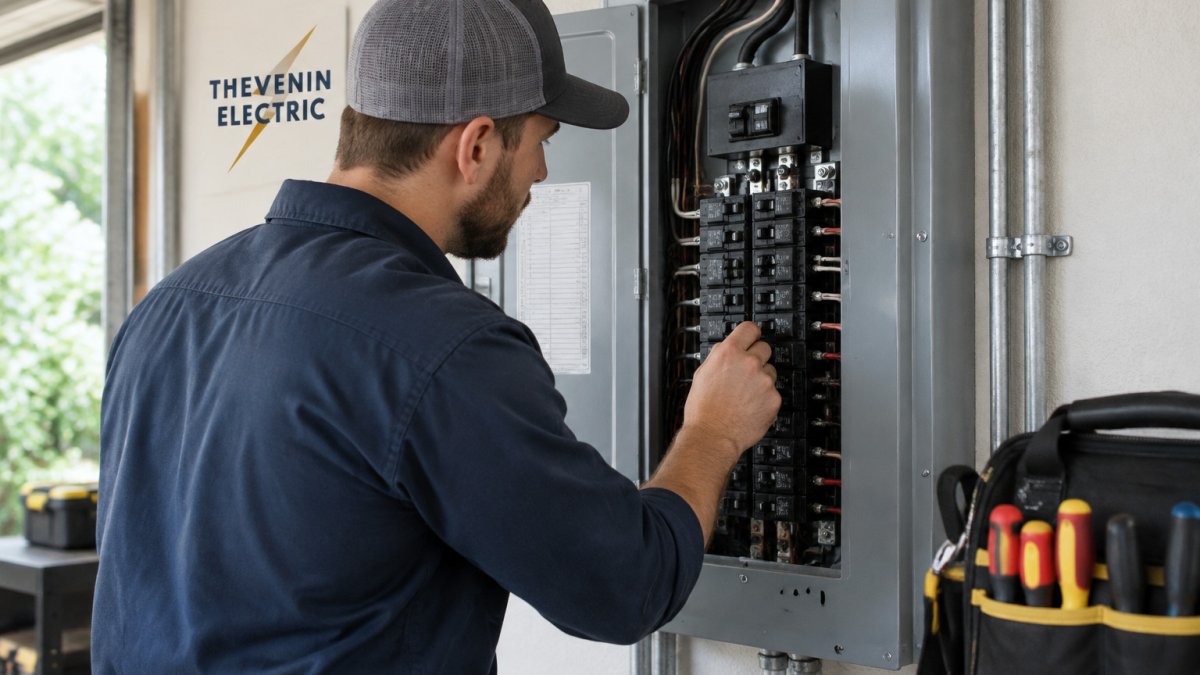
Rough-in wiring is the phase that decides everything downstream. Once drywall goes up, moving an outlet means cutting and patching. Builder coordination during this window is where a good electrician earns their keep.
Questions to Ask an Electrical Contractor Before You Sign
Most hiring guides hand you a list of soft questions, "Are you licensed?" "Do you show up on time?", that any contractor can answer well in an interview and still leave you exposed on a new build. The questions that actually separate a new-construction electrician from a service-call electrician are about coordination, documentation, and how change gets handled once the schedule is running.
Start with the ones that reveal whether they have run a ground-up build before:
How many new-construction projects have you completed in the last two years, and can I speak with two of those builders? A service electrician may be excellent at troubleshooting and still have never coordinated rough-in with a framer, HVAC, and plumber on the same schedule.
Who is on site during rough-in, and is that the same licensed electrician who priced the job? On a new build, the person laying out boxes and circuits is making decisions that get locked behind drywall. You want continuity between the bid and the install.
How do you coordinate with the general contractor and other trades? Ask specifically how they handle the sequence, when they need the framer done, when they need the HVAC rough-in complete, and how they avoid drilling through each other's work.
What is your change-order process, and what triggers one? A move requested after rough-in is a change order. A move requested during design is not. You want the contractor to explain the difference in plain terms before you sign.
How do you document what was installed? Ask whether you will receive as-built drawings, a panel schedule, and a list of circuits at handover. This matters for future service work and for resale.
What happens if an inspection fails? The answer should describe who corrects it, at whose cost, and on what timeline. A contractor who has never had a failed inspection is either very good or very new, ask which.
What is excluded from your bid? This is the single most useful question. The exclusions list is where budgets break, and a contractor who can rattle it off has done this before.
Ask for the license number in writing before you ask for a bid. Contractors who hesitate or deflect on this question are telling you something useful.
A contractor who has never worked a new build will struggle with the sequencing. Ask for references from builders specifically, not just homeowners, a homeowner reference tells you the work was neat and the bill was fair, but it does not tell you the electrician kept the schedule moving when the framer was late.
Defining the New Construction Electrical Scope of Work
A clear new construction electrical scope of work is the document that prevents disputes. It should list every item the electrician is responsible for, and just as importantly, what is excluded.
A solid scope for a new home covers these categories:
Service and panel. The service capacity being installed, the panel location, the breaker space being reserved for future circuits, and who is responsible for the service drop or underground feed coordination with the utility.
Branch circuits. A room-by-room count of receptacles, switches, and dedicated circuits. "Standard wiring" is not a scope. "Kitchen: two small-appliance circuits, one dedicated circuit for the range, one for the dishwasher, one for the disposal, plus six counter receptacles" is a scope.
Devices and fixtures. Who supplies the fixtures, who installs them, and what happens if the homeowner has not selected fixtures by the finish phase. This is where allowances come in.
Low-voltage and data. Whether data, cable, and any smart-home wiring are included, and if so, who terminates and tests them.
Exterior and outbuilding circuits. Garage, shop, exterior lighting, and any outbuilding feeds. These are frequently left off a scope and then added as change orders.
Permit and inspection responsibility. Who pulls the permit, who schedules each inspection, and who pays the permit fees. Get this in writing.
Change-order process. How changes are priced, who approves them, and what counts as a change versus what is already covered.
Handover documentation. As-built drawings, panel schedule, and a circuit list at completion.
Allowances deserve their own paragraph because they are the most common source of new-build budget surprises. An allowance is a dollar figure the contractor budgets for an item the homeowner has not yet selected, light fixtures are the classic example.
If the scope does not say who supplies the light fixtures and who installs them, you have already found the gap that will cause the argument.
Vague scopes are where budgets break. "Standard electrical" is not a scope. A room-by-room count is. When you compare bids, normalize them to the same scope first, same fixture count, same allowance assumptions, same exclusions, and only then compare the totals.
How to Compare Electrical Contractor Bids
Compare bids line by line, not by the bottom number. The lowest bid is often the one with the most exclusions, and the gaps show up later as change orders.
What to Compare | Why It Matters | Red Flag |
Scope detail | Shows what is actually included | "Standard wiring" with no counts |
Permit responsibility | Determines who owns compliance | Contractor assumes you will pull it |
Materials specified | Affects quality and longevity | No brand or grade listed |
Change-order process | Predicts cost overruns | No written process |
Timeline and milestones | Ties to the build schedule | Vague "when we get there" |
References from builders | Proves new-build experience | Homeowner references only |
When you compare electrical contractor bids, ask each one to price the same scope. If the scopes differ, the bids are not comparable. Normalize them first, then compare.
Pricing itself depends on the size of the home, the service capacity required, the number of circuits, fixture selection, and site conditions. Ask for a clearly defined scope and a total price, and expect the factors behind it to be explained.
Your New Home Electrical Planning Checklist
Use this new home electrical planning checklist before rough-in begins. It catches the decisions that are painful to reverse.
Confirm service capacity and panel space for current and future loads
Walk every room and mark outlet, switch, and fixture locations
Plan dedicated circuits for the kitchen, laundry, and any large appliances
Decide on EV charger provisions now, even if the charger comes later
Plan exterior lighting, garage, and outbuilding circuits
Confirm smoke and carbon monoxide alarm locations with the electrician
Decide on data, cable, and low-voltage runs before drywall
Confirm the permit and inspection schedule in writing
Two items on that list deserve emphasis. First, panel capacity and panel space are not the same thing. A panel can have adequate capacity and still be full of breakers, so plan the physical space. Second, an EV charger does not automatically require a service upgrade.
Load calculations belong to the electrician, not the homeowner. Wire sizing depends on the circuit requirements, conductor type, temperature ratings, and installation conditions, so treat any rule of thumb you find online with suspicion.
Conclusion
A new build gives you one clean chance to get the electrical right, and the decisions that matter most happen before the drywall goes up.
If you are planning a build in the Corvallis or Albany area and want an electrician involved from the design phase through final inspection, Thevenin Electric can help. We are licensed, bonded, and insured, we work directly with the licensed electrician doing the work, and we keep pricing and communication clear from the first walkthrough. Reach out for an evaluation or a quote on your project.
Frequently Asked Questions
What should I ask a licensed electrician before hiring them for new construction?
Ask for their license number and insurance certificates, then confirm both with the state. Ask who will actually be on site day to day and who supervises the work. Ask how they handle permits and inspections, how they coordinate with your builder and other trades, and how they communicate schedule changes. Request references from other general contractors they have worked with on similar builds. A licensed electrician should answer these plainly and put the important details in writing.
How do I verify an electrician's license and insurance?
Ask for the license number and check it through the state licensing board's online lookup, confirming the license is active and covers the type of work you need. For insurance, request a certificate of insurance showing general liability and workers' compensation coverage, and call the insurer to confirm it is current. Do this before signing a contract, not after. It takes a few minutes and protects you from uninsured workers on your property.
When should an electrician be involved in a new home build?
Bring a licensed electrician in during design, before the plans are finalized. Their input on service capacity, panel location, circuit layout, and outlet placement is far cheaper to change on paper than after rough-in wiring is installed. They should also be on site during framing for rough-in, return for finish work after drywall, and handle the final inspection and handover. Waiting until framing starts usually means compromises.
What should an electrical proposal for new construction include?
A solid proposal lists the scope of work in detail: service size, panel type and location, circuits, device and fixture counts, and what is excluded. It should state who pulls permits and schedules inspections, the project timeline tied to construction phases, and the payment schedule. Ask whether the price covers materials and labor together or separately. A clearly defined scope and total price are acceptable; you do not need every line itemized, but you do need to know what you are and are not getting.
Request a Quote
Comments