
9 Warning Signs of a Dangerous Federal Pacific Panel

Last Updated: October 30, 2026
Quick Summary
A Federal Pacific panel is an older electrical panel, often called an FPE panel, that many homes still use. Warning signs fall into three tiers: identification clues, signs that call for prompt evaluation, and signs that mean stop and call now. Breakers that fail to trip are a risk you cannot see, so a licensed electrician should evaluate any suspect panel.
Check the panel door or interior label for Federal Pacific Electric, FPE, or Federal Pacific.
Breakers marked Stab-Lok are another identification clue for this panel design.
Warm breakers, buzzing, or humming from the panel call for prompt evaluation.
Scorch marks, melted plastic, or burning smell mean stop using affected circuits and call now.
Never open the panel or reset breakers yourself; have a licensed electrician evaluate it.
Table of Contents
What a Federal Pacific Panel Is and Why It Gets Flagged
If you own an older home, you may have a Federal Pacific Electric panel, often called an FPE panel. Federal Pacific made electrical panels and breakers for decades, and many of them are still in service in American homes. Electricians flag these panels because the breakers can fail to trip when they should, which leaves wiring unprotected during an overload or short circuit.
How to Identify a Federal Pacific Panel and Stab-Lok Breakers
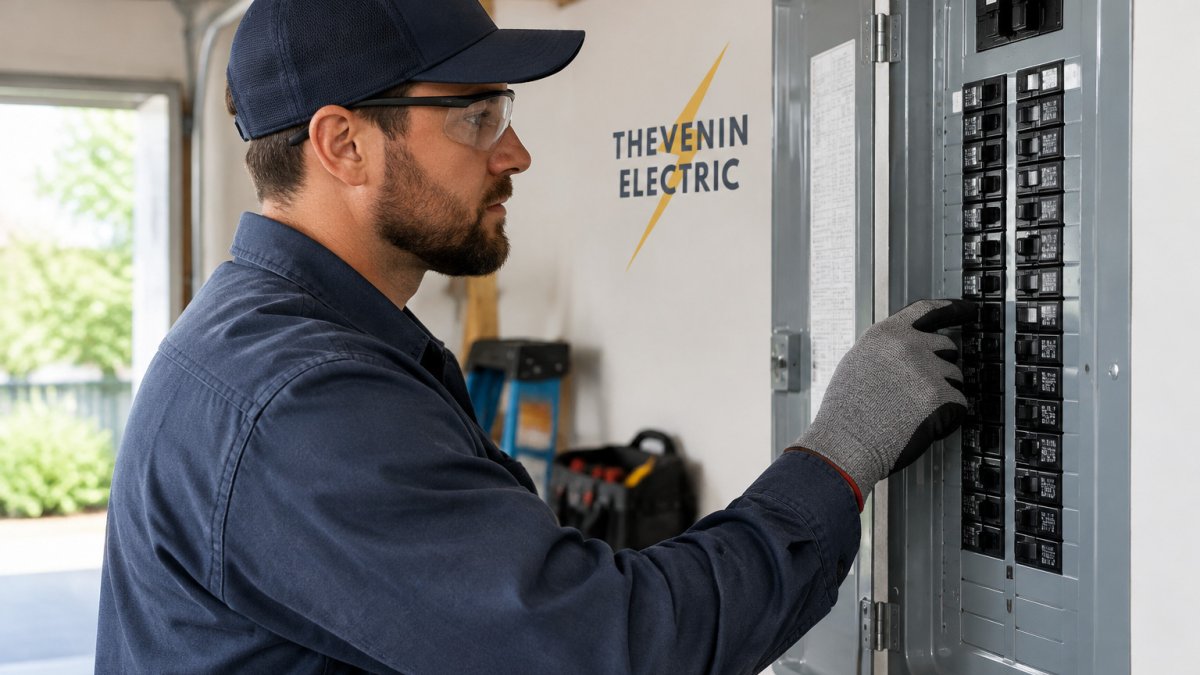
Look for the manufacturer name on the panel door or inside the panel cover. Federal Pacific panels are usually gray metal and carry the Federal Pacific Electric name.
Identifying the panel is simple, but do not open the cover or touch the breakers. If you find the name and suspect a problem, call a licensed electrician to confirm what you have.
Federal Pacific Panel Warning Signs to Check First
Not every sign carries the same weight. Some tell you what panel you have. Others tell you something is already going wrong inside it. Sort what you observe into three tiers so you know how urgently to act.

Watch Out Do not remove the panel cover, touch the breakers, or reset a breaker that has tripped repeatedly to "test" it. Everything below can be observed from outside the panel with the cover in place.
Tier 1, Identification clues (what panel you have)
These confirm the brand and design. They do not, by themselves, tell you the panel's condition, but they are the reason a licensed electrician should look closer.
The panel door or interior label reads Federal Pacific Electric, FPE, or Federal Pacific.
Breakers are marked "Stab-Lok."
The panel is the familiar gray metal enclosure with a split bus or a row of thin, snap-on breakers.
A panel can carry every one of these clues and still look perfectly normal from the outside. That is the point of the next tier.
Tier 2, Warning signs that warrant prompt evaluation
These suggest heat, arcing, or a connection problem somewhere in the panel. None of them means the house is about to burn down, but each is worth a professional look sooner rather than later.
Breakers that rarely or never trip. A breaker's job is to open the circuit when current exceeds its rating. If a breaker never trips even under heavy load, it may not be doing its job.
Frequent tripping on circuits that should handle their load. Repeated trips on a circuit that used to be fine can point to a failing breaker, a loose connection, or a genuine overload. The cause matters, and only an electrician can tell them apart.
Warm breakers or a warm panel face. Breakers carry current and warm slightly in normal use. A breaker that feels noticeably hotter than its neighbors, or a panel face that is warm to the touch, points to resistance at a connection.
Tier 3, Signs that mean stop and call now
These are active heat or damage indicators. Treat them as urgent.
Scorch marks, soot, or dark streaks on the panel cover or around breaker openings.
Discolored, blistered, or melted plastic on breakers or the panel interior visible through the door.
Rust, corrosion, or water staining on the panel enclosure or where the service conductors enter.
If you see smoke, sparks, or flames, leave the home and call 911 first. Then arrange for an electrician to evaluate the panel before power is restored to the affected circuits.
The sign that isn't visible: a breaker that fails to trip
A breaker that fails to open the circuit during an overload or short circuit is a warning sign you cannot see. For a deeper look at how to tell overload from short circuit, read why breakers keep tripping and safe fixes.
That is why "it looks fine" is not proof of safety with this panel. Absence of visible damage tells you the panel is not currently showing heat or arcing symptoms.
Key Takeaway Use the tiers to decide urgency, not to decide safety. Identification clues mean "have it evaluated." Tier 2 signs mean "have it evaluated soon." Tier 3 signs mean "stop using the affected circuits and call now." None of them substitute for a professional inspection.
If you are seeing any Tier 2 or Tier 3 sign, Thevenin Electric can evaluate the panel and explain what we find in plain terms. You can also book electrical troubleshooting in Corvallis for symptoms like flickering lights or tripping breakers. Our Electrical Panel Upgrades & Replacements service covers evaluation and replacement for homes with older breaker panels.
Here is a quick reference for the warning signs, sorted by how urgently each one calls for action.
Tier | Sign | What to do |
1 - Identification | Label reads Federal Pacific Electric, FPE, or Federal Pacific | Have a licensed electrician evaluate it |
1 - Identification | Breakers marked "Stab-Lok" | Have a licensed electrician evaluate it |
2 - Prompt evaluation | Breakers that rarely or never trip | Evaluate soon; breaker may not be protecting the circuit |
2 - Prompt evaluation | Warm breakers or warm panel face | Evaluate soon; suggests resistance at a connection |
2 - Prompt evaluation | Buzzing, humming, or crackling from the panel | Evaluate soon; may signal arcing or a loose connection |
3 - Call now | Scorch marks, soot, or melted plastic on breakers or panel | Stop using affected circuits and call now |
3 - Call now | Rust, corrosion, or water staining on the enclosure | Stop using affected circuits and call now |
3 - Call now | Smoke, sparks, or burning smell | Leave the home and call 911 first |
What to Do Right Away When You Spot a Warning Sign
Take a warning sign seriously, but do not panic and do not open the panel yourself.
Morgan Inspection Services
Turn off any unnecessary loads on the suspect circuit
Avoid heavy use of appliances on that circuit until it is checked
Do not touch the panel or try to replace breakers
If you see smoke, sparks, or flames, leave the home and call 911 first. Then call your electrician.
Thevenin Electric can evaluate a suspect panel and explain whether it can be repaired or should be replaced. Learn more about our panel upgrades and replacements. Our Electrical Panel Upgrades & Replacements service covers replacement and upgrades for homes with older breaker panels.
Federal Pacific Panel Inspection: What a Licensed Electrician Checks
An inspection of a Federal Pacific panel is not a pass/fail test on the brand name. It is an evaluation of the panel's actual condition, connections, and breakers, plus a judgment about whether the panel can continue to provide the protection the home depends on. Here is what that evaluation typically involves and how to use the results.
What gets checked
A thorough evaluation generally covers:
Breaker condition and operation. Whether breakers sit firmly, whether any show heat damage, and whether the breaker-to-bus connection is sound. A breaker that is loose on the bus is a resistance point, and resistance means heat.
The bus bar and its connections. The bus is the metal strip the breakers snap onto. Corrosion, pitting, or discoloration on the bus points to heat or moisture and is a common finding in older panels.
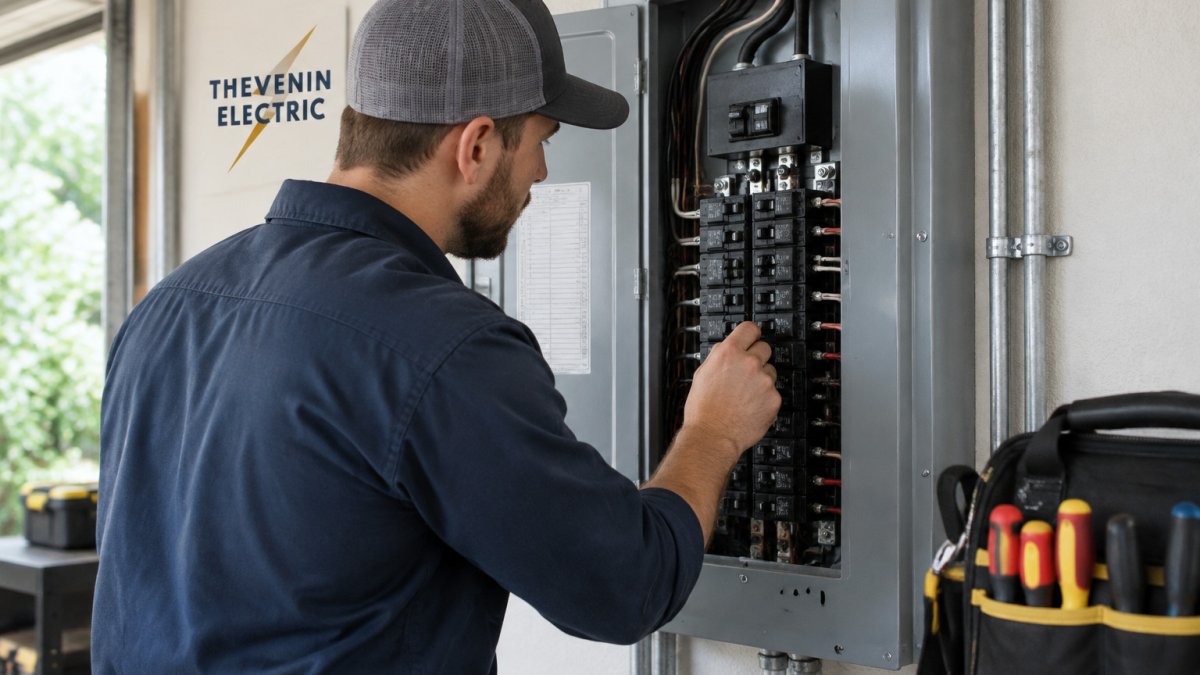
Signs of heat and arcing. Darkening, melted insulation, or soot inside the enclosure, visible only with the cover removed by a qualified person.
Ask the electrician to walk you through each finding in plain terms. A good evaluation ends with a clear explanation of what was found, what it means, and what the realistic options are.
Repair or replace? A neutral way to decide
There is no single rule that says every Federal Pacific panel must be replaced. The decision usually turns on a few practical questions:
Are there active signs of heat, arcing, or damage? If so, the panel is already failing in a way that matters, and replacement is usually the safer path.
Are the breakers functioning as intended? A breaker that will not trip under test conditions is not providing protection, regardless of how the panel looks.
Is the panel otherwise sound and correctly installed? Grounding, bonding, conductor condition, and workmanship all factor in.
A repair that addresses a specific defect, a loose breaker, a damaged conductor, a bad connection, can be appropriate when the panel is otherwise sound. Replacement is usually the recommendation when the panel shows real warning signs or when the breakers cannot be relied on. The right answer depends on what the inspection actually finds, not on the brand name alone.
Getting a second opinion
If you have been told your Federal Pacific panel must be replaced and you are not sure, a second evaluation is reasonable, especially if the first recommendation came without a clear explanation of what was found. Ask each electrician the same questions: What specifically did you observe? Which findings point to a safety problem now versus a future concern? What are the options, and what does each involve?
Pro Tip Bring the panel label information and any prior inspection reports to the conversation. Photos of the panel door and label help an electrician confirm the model before the visit, though the condition can only be judged in person.
If you would like an evaluation of a suspect panel, Thevenin Electric can inspect it, explain the findings, and outline your options without pushing work the panel does not need. Visit our contact page to request a panel evaluation.
Federal Pacific Panel Replacement and What It Costs
Replacement is the usual recommendation when a Federal Pacific panel shows real warning signs. Costs depend on the panel size, the condition of the wiring, permit requirements, and any additional work the home needs, so the best next step is a site-specific quote from Thevenin Electric.
Booking Your Panel Evaluation with Thevenin Electric
If you suspect a Federal Pacific panel in your home, do not wait for a failure to find out. A licensed electrician can confirm what you have, explain the risk, and outline your options. Thevenin Electric serves Corvallis, Albany, Lebanon, Philomath, and nearby communities.
To request a panel evaluation, visit our contact page or call (541) 250-3503.
Frequently Asked Questions
What are the signs that my electrical panel is bad?
Common signs include breakers that trip often or not at all, warm or discolored panel covers, a burning smell near the panel, buzzing or crackling sounds, flickering lights, and outlets that feel warm. Any of these warrants a professional evaluation. A licensed electrician can determine whether the problem is a loose connection, an overloaded circuit, or a failing component, and advise on repair or replacement.
Can you sell a house with a Federal Pacific panel?
Yes, many homes with Federal Pacific panels are sold every year, but buyers and their inspectors often flag them, and some insurers or lenders may ask about them. Sellers who have the panel evaluated or replaced beforehand usually have an easier time with negotiations and documentation. Check with your real estate agent and insurer about what applies in your situation.
What should I do if a breaker in a Federal Pacific panel will not trip?
Do not rely on that breaker for protection. Turn off power to the circuit at the main breaker if you can do so safely, avoid heavy loads on that circuit, and schedule a licensed electrician to inspect the panel promptly. A breaker that fails to trip during an overload or short circuit can allow wiring to overheat, which is why this symptom should be treated as urgent.
Can a Federal Pacific panel show signs of danger without visible damage?
Yes. Breakers can fail internally without any visible sign on the outside, so a panel can look normal and still be hazardous. This is why a professional inspection matters even when nothing seems wrong. Visible symptoms like burn marks or odors are important warnings, but their absence does not confirm the panel is safe.
Comments